Sourdough Pizza Night: A Whole Wheat Crust & Beautiful Topping Ideas
FROM THE KITCHEN

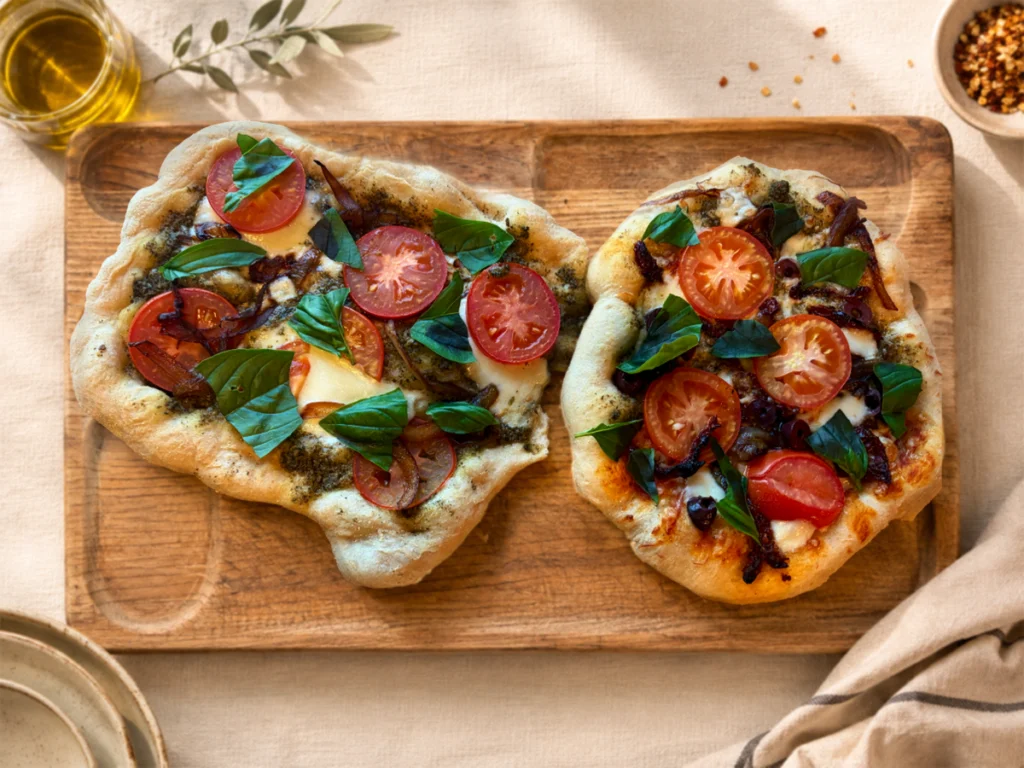
There is something rather lovely about a homemade pizza night, and it’s time we shared Fittbe HQ’s favorite sourdough pizza recipe with you all! A little flour on the counter, a bottle of olive oil within reach, a few favorite cheeses, and everyone wandering into the kitchen to join in the fun! (oh and of course a fabulous playlist, that goes without saying).
Like so many others right now, we’re crazy for sourdough. And rightfully so, it’s absolutely delicious, and the naturally leavened bread is one of the healthiest you can make. This is our kind of pizza: a beautifully chewy sourdough crust made with bread flour and a blend of organic hard red and golden whole wheat, given plenty of time to develop flavor in the refrigerator. The result is a light, golden crust with a gentle tang, a crisp bottom, and just enough character to stand up to all sorts of delicious toppings.
And the toppings? Well, they can be just as inspired and varied as our Fittbe Monday Pilates & Barre mixes! That is where the fun begins on the mat, at the barre, and of course, in the kitchen.
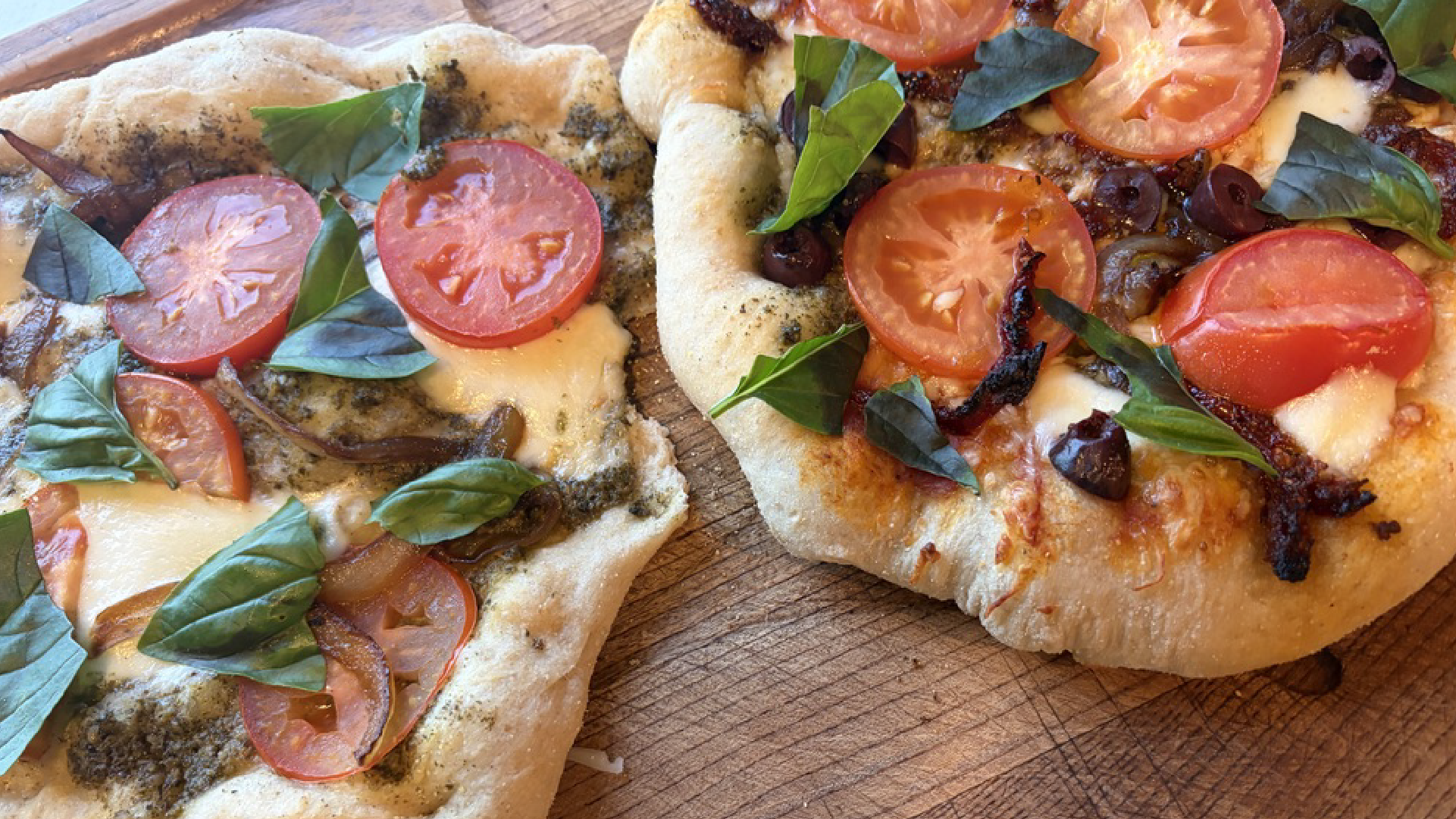
We love the familiar combination of tomato, mozzarella, and basil, of course. But we also love a pizza scattered with briny olives, sweet caramelized onions, a little eggplant spread, and generous shavings of Parmesan and Pecorino. Add a few fresh herbs, a drizzle of good olive oil, and suddenly pizza night feels a little more like dinner at a charming Italian trattoria!
Make the dough ahead, gather a few lovely ingredients, and let everyone create a favorite combination. It’s dinner, and an activity all at once. And, just like a Fittbe Pilates or Barre App session. No two pizzas need to be quite alike.
Why You’ll Love This Recipe
- A flavorful sourdough crust. A long, cold fermentation develops a pleasantly tangy flavor and a lovely texture.
- A little whole wheat, a lot of character. Twenty-five percent whole wheat flour adds depth without making the crust heavy.
- Perfect for making ahead. Prepare the dough a day or two before your pizza night.
- Endless topping possibilities. From a classic Margherita to a rather fancy combination of olives, eggplant, caramelized onions, and two Italian cheeses.
- A lovely way to gather. Set out the ingredients, let everyone choose their toppings, and make an evening of it.
The Secret to a Beautiful Sourdough Pizza Crust
The trick is a combination of good flour, an active sourdough starter, and a little patience.
This dough uses 75% bread flour and 25% whole wheat flour. We particularly like a mixture of hard red and golden whole wheat, which gives the crust a little nutty flavor while keeping it light and chewy.
A moderate amount of starter allows the dough to ferment gradually. After a short period of room-temperature fermentation, the dough rests in the refrigerator for 24–48 hours. This slow rest develops flavor, relaxes the gluten, and makes the dough easier to stretch.
The final result is a crust with a tender, chewy center, a crisp underside, and beautifully browned edges.
One small note: sourdough has its own schedule. The times below are useful guides, but the appearance and feel of your dough will tell you when it is ready.
What You’ll Need
For the sourdough pizza dough
Makes two approximately 12-inch pizzas, or three smaller pizzas.
| Ingredient | Amount |
|---|---|
| Bread flour | 375 g |
| Whole wheat flour, preferably a mix of hard red and golden | 125 g |
| Water, lukewarm | 310–325 g |
| Active sourdough starter, 100% hydration | 75–90 g |
| Fine salt | 10 g |
| Extra-virgin olive oil, optional | 15 g |
| Semolina or bread flour, for shaping | As needed |
A note on the water: Begin with 310 g. Whole wheat flour absorbs more water than white flour, so add the remaining 10–15 g if the dough feels stiff. It should feel slightly tacky, not dry.
The dough is easiest to work with when its final temperature after mixing is around 75–78°F (24–26°C).
For the simple tomato sauce
- 1 can (14 oz) good-quality whole peeled tomatoes, preferably San Marzano-style
- A pinch of fine salt
- A splash of extra-virgin olive oil
Crush the tomatoes by hand or pulse them briefly in a blender. Stir in the salt and olive oil. There is no need to cook the sauce; it will cook beautifully on the pizza.
For the toppings
It probably doesn’t need mentioning, but, do choose a few favorites rather than using everything at once, (my goodness I think that would be ridiculous!)
- Low-moisture mozzarella or well-drained fresh mozzarella
- Parmesan, freshly grated or shaved
- Pecorino Romano, finely grated
- Kalamata or Castelvetrano olives
- Tomatoes
- Pesto
- Sweet caramelized onions
- Trader Joe’s eggplant spread
- Fresh basil, oregano, or thyme
- Extra-virgin olive oil
- Roasted mushrooms, peppers, or eggplant
- Prosciutto or Italian sausage, if desired
- A little arugula or lemon zest for finishing
The cheeses deserve a special mention. Parmesan brings a nutty, savory richness, while Pecorino adds a saltier, sharper finish. A little of each can make a simple pizza taste wonderfully considered.
Important: You need to start this 1-2 days before pizza night! Let’s Make the Dough
1. Mix the dough
In a large mixing bowl, combine the active sourdough starter with most of the water. Add the bread flour and whole wheat flour, mixing until no dry patches remain.
Cover and let the dough rest for 20–30 minutes.
This short rest, often called an autolyse when performed with just flour and water, gives the flour time to hydrate and helps the dough become easier to work with.
Add the salt and optional olive oil. Mix or knead briefly until the dough comes together and begins to feel smooth and cohesive. It will remain slightly tacky, which is perfectly fine.
2. Let the dough rise
Cover the bowl and leave the dough at a comfortably warm room temperature for approximately 2–4 hours.
During the first 90 minutes, perform two or three sets of stretch-and-folds, spacing them about 30 minutes apart. To do this, lift one edge of the dough, stretch it gently upward, and fold it back over itself. Turn the bowl and repeat a few times.
By the end of bulk fermentation, the dough should look airier and have increased in volume by roughly 30–50%. It does not need to double.
Whole wheat flour can encourage fermentation to move along a little more quickly, so watch the dough rather than relying on the clock alone.
3. Divide, shape, and refrigerate
Turn the dough onto a lightly floured counter and divide it into two equal portions for larger pizzas or three portions for smaller ones.
Shape each portion into a smooth, taut ball and place it in a lightly oiled, covered container with enough room to expand.
Refrigerate for 24–48 hours.
Here is how the timing affects your crust:
- 24 hours: A milder sourdough flavor and a slightly firmer, more elastic dough.
- 48 hours: A deeper, gently tangy flavor, a more relaxed dough, and lovely browning.
Around 48 hours is our suggested sweet spot. Longer fermentation may work, but the dough can gradually become weaker, depending on your starter and refrigerator temperature.
4. Bring the dough to room temperature
About 1½–2 hours before baking, remove the dough from the refrigerator.
Keep it covered while it warms and relaxes. Dough that is too cold tends to spring back when stretched, so giving it time on the counter makes shaping much easier.
Meanwhile, prepare your sauce, grate your cheeses, and arrange the toppings. This is an excellent time to slowly caramelize onions or roast vegetables if you are using them.
5. Heat the oven
Preheat your oven to its highest setting, ideally 500–550°F (260–290°C), with a pizza steel or stone on a rack for at least 45 minutes.
A thoroughly heated baking surface is one of the best ways to achieve a crisp bottom in a home oven.
If your oven does not reach these temperatures, use its maximum setting and allow a little extra baking time.
6. Stretch and top
Lightly flour your work surface with bread flour or semolina. Gently press each dough ball into a round, then stretch it outward, leaving a slightly thicker rim around the edge.
Aim for a 10–12-inch pizza, depending on the size of your dough ball. Avoid using a rolling pin if you want to preserve the airy edges.
Transfer the dough to a pizza peel dusted with semolina or cornmeal.
Spread on a thin layer of sauce, if using, and add your chosen toppings. Keep the toppings modest; too much sauce, cheese, or moisture can prevent the center from crisping properly.
7. Bake until golden
Slide the pizza onto the hot steel or stone and bake for approximately 8–12 minutes, until the crust is golden and blistered, the cheese is bubbling, and the underside is crisp.
Exact timing will depend on your oven, baking surface, and toppings.
Finish with fresh basil, a drizzle of good olive oil, or a final shower of finely grated Parmesan and Pecorino. Let the pizza rest briefly before slicing.
Then bring it straight to the table.
Make It Your Own: Our Favorite Pizza Combinations
This is the part we look forward to most. Start with a simple dough and a few good ingredients, then build combinations that feel a little special without becoming fussy.
1. The Italian Garden
Tomato, mozzarella, basil, and Parmesan
A classic for good reason.
Spread a thin layer of tomato sauce over the dough, add mozzarella, and bake until bubbling and golden. Finish with fresh basil, a drizzle of extra-virgin olive oil, and freshly shaved Parmesan.
Simple, fragrant, and always welcome.
2. The Olive & Caramelized Onion
Kalamata olives, sweet onions, mozzarella, Parmesan, and Pecorino
This is one for those who love a savory, slightly briny pizza.
Scatter mozzarella over a light layer of tomato sauce, then add sliced Kalamata olives and a generous spoonful of slowly caramelized onions. Finish with Parmesan and a little Pecorino.
The onions bring sweetness, the olives provide a lovely salty bite, and the cheeses tie everything together.
For an extra flourish, add a few fresh thyme leaves before baking.
3. The Eggplant & Two-Cheese
Trader Joe’s eggplant spread, mozzarella, Parmesan, and Pecorino
A little jar of eggplant spread can be a wonderful shortcut to a more interesting pizza.
Spread a thin layer of the eggplant spread over the dough, either on its own or over a very light layer of tomato sauce. Add mozzarella, then finish with Parmesan and Pecorino.
The eggplant brings a rich, savory flavor, while the cheeses add saltiness and depth. A few chopped olives or fresh oregano would be lovely here, too.
A little tip: Eggplant spreads vary in moisture and seasoning, so use a light hand and taste before adding extra salt.
4. The Mushroom & Thyme
Roasted mushrooms, mozzarella, Parmesan, and fresh thyme
Earthy mushrooms and a chewy sourdough crust are a particularly happy pairing.
Sauté or roast sliced mushrooms first to remove excess moisture. Add them to the pizza with mozzarella and a little Parmesan. Bake until the edges are golden, then finish with fresh thyme and a drizzle of olive oil.
For a more luxurious version, add a few thin slices of fontina or a small spoonful of ricotta.
5. The Fig, Prosciutto & Gorgonzola
Fig spread, Gorgonzola, mozzarella, prosciutto, and arugula
For a pizza that feels right at home at a small dinner party, try this sweet-and-savory combination.
Spread a thin layer of fig spread over the dough. Add a little mozzarella and small pieces of Gorgonzola, then bake until golden. Arrange prosciutto over the finished pizza and scatter with fresh arugula.
A few toasted walnuts and a light drizzle of balsamic glaze make a lovely finishing touch.
Keep the Gorgonzola restrained; a little goes a long way.
6. The Pear, Walnut & Blue Cheese
Thinly sliced pear, blue cheese, mozzarella, walnuts, and thyme
This is a beautiful alternative to tomato-based pizza.
Brush the dough lightly with olive oil, then add a little mozzarella, thin slices of ripe but firm pear, and small pieces of blue cheese. Bake until the crust is golden and the pear is tender.
Finish with toasted walnuts, fresh thyme, and a very light drizzle of honey.
For a savory variation, add a few caramelized onions.
7. The Roasted Pepper & Olive
Roasted red peppers, Castelvetrano olives, mozzarella, and Pecorino
Sweet roasted peppers and buttery green olives make a colorful, flavorful combination.
Use a light layer of tomato sauce or olive oil, then add mozzarella, well-drained roasted peppers, and sliced Castelvetrano olives. Finish with Pecorino and fresh oregano.
A scattering of finely sliced red onion would be lovely here, too.
8. The White Pizza with Lemon & Ricotta
Ricotta, mozzarella, garlic, Parmesan, lemon zest, and basil
No tomato sauce required.
Stir a little olive oil and finely grated garlic into ricotta, then spread a thin layer over the dough. Add mozzarella and a modest amount of Parmesan.
Bake until the crust is golden. Finish with fresh basil, finely grated lemon zest, and another drizzle of olive oil.
The lemon brightens the rich cheeses, making this pizza feel fresh and elegant.
9. The Caramelized Onion & Goat Cheese
Sweet onions, goat cheese, mozzarella, and thyme
For those evenings when a few simple ingredients are all you need.
Brush the dough with olive oil, add a little mozzarella, and scatter with caramelized onions and small pieces of goat cheese. Bake until golden and finish with fresh thyme and freshly ground black pepper.
If you like, add a handful of toasted walnuts for crunch.
10. The Garden Pesto
Pesto, mozzarella, roasted vegetables, Parmesan, and basil
Spread a thin layer of pesto over the dough, then add mozzarella and a few well-drained roasted vegetables. Roasted zucchini, peppers, and eggplant all work beautifully.
Bake until the edges are crisp, then finish with Parmesan, fresh basil, and a little olive oil.
If you prefer a more traditional pizza flavor, add a few spoonfuls of tomato sauce beneath the pesto.
A Few Little Details That Make a Difference
Use a light hand with the toppings. The crust is part of the pleasure, and it deserves a chance to crisp and develop those lovely golden edges.
Cook watery vegetables first. Mushrooms, eggplant, and zucchini release moisture. Roasting or sautéing them before adding them to the pizza helps prevent a soggy center.
Choose your cheese thoughtfully. Low-moisture mozzarella is reliable in a home oven. Fresh mozzarella is lovely, too, but drain it well. Parmesan adds nutty richness, while Pecorino contributes a sharper, saltier finish.
Finish after baking. Fresh basil, arugula, lemon zest, delicate herbs, and a drizzle of good olive oil are best added at the end.
Make a little tasting board. Put the olives, cheeses, caramelized onions, eggplant spread, and herbs in small bowls on the counter. Everyone can build a favorite pizza, and the evening becomes a little more festive.
Planning Ahead & Storing Leftover Dough
The beauty of this recipe is that most of the work happens before pizza night.
- One day ahead: Mix the dough, allow the initial fermentation, divide, and refrigerate.
- Two days ahead: Prepare the dough and allow the full 48-hour cold ferment for a deeper flavor.
- Leftover dough: Keep covered in the refrigerator for approximately 2–3 days, provided it remains in good condition and has not over-fermented.
- Freezing: Dough balls can be frozen after shaping. Wrap or seal them well, then thaw overnight in the refrigerator and allow time at room temperature before stretching.
For the best texture, use the dough while it still has good strength and elasticity.
Frequently Asked Questions
Can I make sourdough pizza dough with whole wheat flour?
Yes. Using 25% whole wheat flour adds a nutty flavor while keeping the crust relatively light. A mixture of hard red and golden whole wheat is particularly nice. Start with the lower amount of water and add more as needed.
Is a 24-hour or 48-hour ferment better?
Both work well. A 24-hour ferment produces a milder flavor, while 48 hours generally gives the dough more tang and makes it easier to stretch. Fermentation speed depends on your starter, dough temperature, and refrigerator.
Can I make this pizza dough without a pizza stone?
Absolutely. A preheated pizza steel or stone is helpful, but a heavy baking sheet turned upside down can also work. Preheat it thoroughly and use your oven’s highest setting.
Why does my pizza crust turn out soggy?
Common culprits include too much sauce, excess cheese, wet vegetables, or an insufficiently heated baking surface. Keep the toppings modest, drain fresh mozzarella, cook watery vegetables first, and allow your oven and baking surface plenty of time to heat.
Can I use fresh mozzarella?
Yes. Tear it into small pieces and drain it well before topping the pizza. Fresh mozzarella contains more moisture than low-moisture mozzarella, so use a little less and avoid crowding the center.
How do I know when the sourdough starter is ready?
Use an active, bubbly starter that has risen after feeding and is at or near its peak. The timing varies with temperature and starter strength, but a healthy, active starter is essential for predictable fermentation.
Perfect Pairings for Pizza Night
A lovely green salad with a lemony vinaigrette is all you really need. Add roasted vegetables, marinated olives, or a small dish of olive oil for dipping the crust.
For a cozy gathering, set the table with linen napkins, a big wooden board, and a few little bowls of toppings. Let everyone try a slice of each combination.
And if you happen to have leftover pizza, breakfast the next morning is already taken care of.
Save a Slice for Later
A good sourdough pizza is more than a quick supper. It is a little reminder that homemade food can be both simple and special, especially when we give it time and choose a few ingredients we truly love.
Make the dough ahead. Invite everyone into the kitchen. Try the olives and caramelized onions, add a little eggplant spread, shave over the Parmesan and Pecorino, and see what becomes your new favorite.
Here’s to a lovely evening, a beautiful crust, and one more reason to gather around the table.
From the Kitchen at Fittbe.
Want to make this another night? Save it for later with a Pin!

If you love sourdough as much as we do, you might enjoy our sourdough English muffins, or our fresh from the oven, sourdough discard cheery chocolate chip cookies, or our classic light whole wheat sourdough boule.
Make it a Fittbe Day.
Your favorite Pilates & Barre workouts, ready whenever you are. And, save all of your favorite recipes, right inside the app!

Pilates • Barre • Good Living